
 0 Visitors
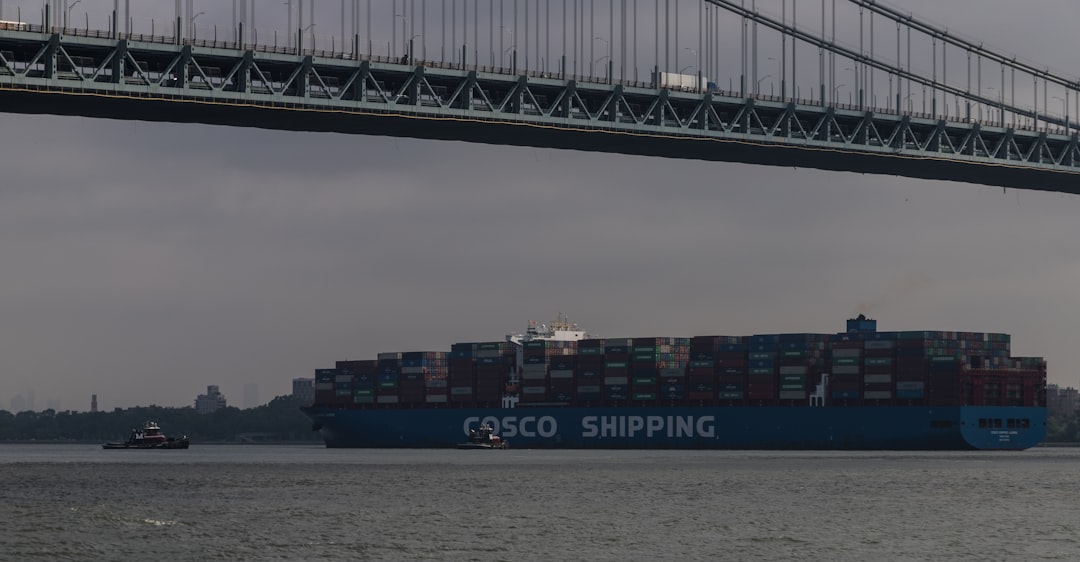
Overview of Recycled Crushed Foam Regrinds Shipping Dynamics to/from Russia
The international trade of plastic waste and scrap, specifically Recycled Crushed Foam Regrinds classified under HS Code 391530 (Waste, parings, and scrap of polymers of vinyl chloride), represents a niche but critical segment of the circular economy supply chain. Shipping these materials to the Port of St. Petersburg in 2026 requires navigating a complex landscape of international sanctions, evolving trade routes, and specialized handling requirements.
Market Context for HS 391530
HS Code 391530 covers PVC-based plastic waste. While global demand for recycled polymers remains high, the Russian market has shifted significantly since 2022. Trade flows are now heavily oriented toward non-Western partners, with logistics providers focusing on "white" official supply schemes to ensure compliance with international and domestic regulations.
Regulatory and Compliance Hurdles
Importing waste materials into Russia involves stringent customs documentation. Shippers must ensure that the "recycled" nature of the product is clearly documented to avoid misclassification as hazardous waste, which carries severe penalties. Furthermore, all shipments must be screened against current OFAC and EU sanctions lists to ensure that neither the shipper, the consignee, nor the financial intermediaries are restricted entities.
In-Depth Analysis of Main Shipping Line & Container Capacity
Following the withdrawal of major global carriers from the Russian market in 2022, the landscape at the Port of St. Petersburg has been reshaped by regional feeder services and specialized operators.
The Role of MSC and Regional Feeders
Mediterranean Shipping Company (MSC) maintains a presence in the Russian market, though its service scope is strictly governed by compliance with applicable sanctions. MSC operates through regional hubs, notably Klaipeda, utilizing feeder vessels to maintain connectivity to St. Petersburg. As of 2026, MSC has optimized its Baltic network with dedicated shuttle services (e.g., Baltic Loop 3 and Baltic Loop 12) to ensure consistent, albeit limited, capacity.
Capacity and Service Frequency
Current capacity is primarily driven by feeder vessels ranging from 1,700 to 3,000 TEU. While these vessels provide essential connectivity, shippers should anticipate irregular sailing frequencies compared to pre-2022 standards. It is critical to coordinate directly with local MSC offices in St. Petersburg to confirm current booking availability, as priority is often given to food, medical, and humanitarian (FMH) cargoes.
Ocean Freight Rates & Cost Optimization for HS Code 391530
Freight rates for shipments to Russia remain highly volatile due to the "risk premium" associated with navigating sanctioned jurisdictions and the reliance on transshipment hubs.
Comparative Freight Rate Trends
Note on Pricing: Exact freight rates are currently fluctuating due to geopolitical instability. The following table represents estimated market trends for containerized freight to the Baltic region.
| Route Segment | Estimated Transit Time | Rate Volatility |
|---|---|---|
| Asia to St. Petersburg (via Hub) | 45–60 Days | High |
| Europe to St. Petersburg (Feeder) | 10–20 Days | Moderate |
Cost Optimization Strategies
- Consolidation: Utilize LCL (Less than Container Load) services where available, though note that some carriers may restrict LCL for specific waste categories.
- Hub Selection: Evaluate transshipment costs at hubs like Klaipeda or Istanbul to minimize total landed cost.
- Advance Booking: Secure space at least 4–6 weeks in advance to mitigate the impact of spot-rate spikes.
Port Container Tracking & Congestion at Port of St. Petersburg
The Port of St. Petersburg has seen a stabilization of container throughput, with terminals operating at approximately 65–70% of pre-2022 capacity. However, operational efficiency is frequently challenged by external factors.
Current Operational Status
While the port is not experiencing the extreme congestion seen in previous years, "bottlenecks" occur due to intensive customs inspections and the time required for sanctions-compliance documentation. Shippers should monitor real-time vessel tracking data to anticipate potential berthing delays.
Digital Tracking and Visibility
With the implementation of the "SPOT" National Goods Arrival Confirmation System, digital transparency is increasing. Shippers are advised to use integrated tracking platforms that provide visibility from the point of origin through to final customs clearance in St. Petersburg to avoid "dark" periods in the supply chain.
Global Logistics Optimization & Supply Chain Strategies
Optimizing the supply chain for recycled materials requires a move away from traditional "just-in-time" models toward "resilient-by-design" strategies.
Mitigating Sanction Risks
The primary risk in 2026 is the disruption of payment infrastructure. Ensure that all financial transactions are processed through banks that are not subject to blocking sanctions. Utilize legal counsel to verify that the specific HS 391530 product does not fall under dual-use or restricted import categories.
Alternative Logistics Channels
For time-sensitive shipments, consider intermodal options. Rail transport via the Central Eurasian Corridor has become a competitive alternative to sea freight, offering significantly faster transit times, albeit at a higher cost per unit. Diversifying your logistics mix between sea and rail can provide a hedge against sudden maritime route closures.
Executive Summary & Future Outlook
The shipment of Recycled Crushed Foam Regrinds to St. Petersburg is a high-compliance operation. Success in 2026 relies on three pillars: rigorous documentation, selection of reliable carriers like MSC that maintain compliant feeder networks, and constant monitoring of the evolving sanctions landscape.
Executive Takeaway: The Russian market remains open for specific industrial materials, but the "gray" logistics era is closing. Focus on transparent, compliant, and documented supply chains to ensure long-term viability.
Sources & References
- Shipping Pneumatic Air Cylinders to the Port of Valencia, Spain
- Shipping Semiconductor Microchips (HS 854231) to the Port of Montreal
- Shipping Tomato Paste Cans (HS 200290) to the Port of Gothenburg, Sweden
- Shipping SPC Vinyl Click Flooring to the Port of Antwerp-Bruges
- Shipping True Wireless Earbuds (HS 8517.62) to the Port of Alexandria, Egypt
- Shipping Semiconductor Microchips (HS 854231) to the Port of Sines, Portugal
- Shipping Centrifugal Water Pumps to the Port of San Antonio, Chile
- Shipping Digital Signage Monitors to the Port of Trieste, Italy
- Shipping Printed Circuit Boards (PCB) to Egypt via Port of Said
- Optimizing Logistics for Solid State Drives (SSD) Imports to the Port of Chittagong, Bangladesh